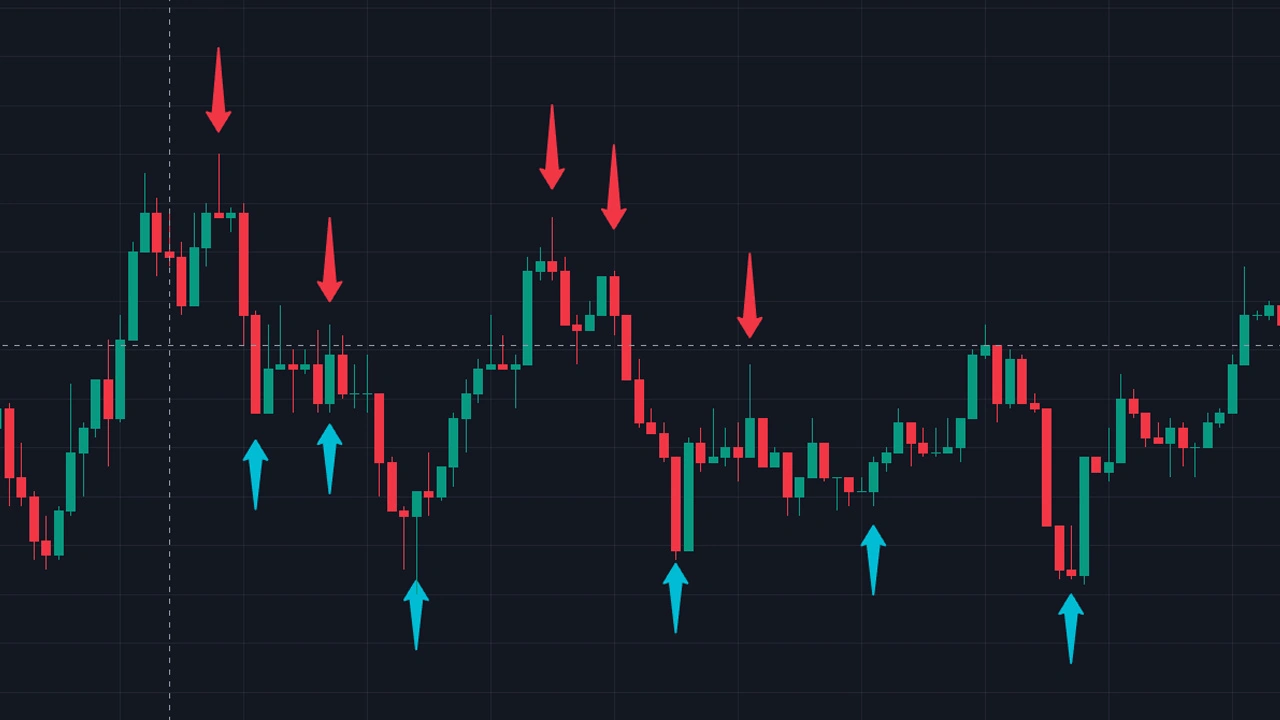
Discover effective scalping strategies for quick profits in forex trading. Learn key techniques, essential indicators, and robust risk management tips to maximize your trading success.
Forex scalping is a short-term trading approach built around capturing relatively small price movements and closing positions quickly. Scalpers typically operate on lower time frames and may remain in a trade for seconds or minutes, although there is no fixed holding period that defines a scalp.
The strategy depends less on predicting large market moves and more on execution quality, trading costs, liquidity, repeatable setups, and strict risk control. Because individual profit targets can be small, spreads, commissions, and slippage have a greater effect on results than they do in many longer-term strategies.
Scalping therefore requires more than fast entries. A complete Forex scalping strategy defines the market conditions to trade, the setup, entry trigger, invalidation point, position size, profit-taking method, maximum session risk, and the circumstances that require the trader to stay out of the market.
What Is Forex Scalping?
Scalping Explained
Scalping is an intraday trading style that focuses on short-term movements inside the wider Forex market.
Instead of holding a position through a large trend, the scalper attempts to capture a smaller section of price movement and exit before market conditions change substantially.
Scalping can involve several trades during a session, while a high number of trades is not a requirement by itself. Trade frequency only becomes useful when each position meets a tested setup and the expected return remains positive after trading costs.
How Scalping Differs From Day Trading
Scalping is a form of day trading, although it generally operates on a shorter holding period.
A conventional day trader can hold a Forex position for several hours. A scalper normally focuses on much shorter intraday movements and may enter and exit several times during the same market session.
Scalping Versus Swing Trading
Swing trading operates on a substantially longer horizon. Swing traders commonly hold positions for several days or weeks and aim to capture larger sections of a market move.
Traders comparing the two approaches can review the Swing Trading Strategies guide.
How Forex Scalping Evolved
Short-term trading existed long before modern electronic Forex platforms. The expansion of electronic execution, streaming price feeds, retail trading platforms, and faster internet access made very short-term currency trading more accessible.
Modern scalping can now be performed manually or through algorithmic systems, although improved technology does not remove spread costs, slippage, latency, or market risk.
What Makes a Market Suitable for Scalping?
Liquidity
Liquidity is important because scalpers enter and exit frequently.
More liquid currency pairs generally have deeper trading activity and can offer tighter bid-ask spreads under normal conditions. Major pairs such as EUR/USD, USD/JPY, and GBP/USD are therefore commonly used for scalping.
Liquidity changes throughout the day, so the same currency pair can trade differently during active and quiet sessions.
Bid-Ask Spread
The spread is the difference between the available bid and ask prices.
A scalper targeting a small movement gives up a larger proportion of the expected trade value to the spread than a trader targeting a much larger move.
For this reason, the strategy should be evaluated using the actual spread paid during the intended trading session rather than the broker's lowest advertised spread.
Volatility
Scalping requires enough price movement to create opportunities.
Extremely low volatility can leave too little movement after trading costs. Extremely high volatility can increase slippage, spread expansion, and the speed at which losses develop.
The objective is therefore not maximum volatility. The strategy needs volatility that matches its stop distance, target, and execution method.
Execution Quality
Short holding periods make execution particularly important.
Delayed fills, rejected orders, requotes where applicable, partial fills, or consistent negative slippage can materially change a scalping strategy's expected performance.
The Real Cost of Forex Scalping
Spread Cost
Every trade begins with the difference between the bid and ask prices.
A strategy that targets only a few pips can become unprofitable when the average spread consumes too much of the expected move.
Trading Commission
Raw-spread or commission-based Forex accounts can charge a separate commission when a position is opened and closed.
The complete trading cost is therefore not the quoted spread alone. Scalpers need to calculate spread, commission, and expected slippage together.
Slippage
Slippage occurs when an order is executed at a different price from the one expected.
Slippage can be positive or negative. Fast price movement, limited liquidity, and economic news can increase the difference between the requested and executed prices.
Latency
Latency is the delay between an order being sent and processed.
Small delays matter more to strategies operating on very short price movements. Automated scalping systems are especially sensitive to execution latency because the market can move before an order reaches its intended price.
Why Costs Must Be Included in Testing
A scalping strategy can appear profitable on a chart while losing money after realistic trading costs are applied.
Backtests and trading journals should therefore include commissions, typical spreads, slippage assumptions, and other applicable charges.
Core Forex Scalping Strategies
Trend Pullback Scalping
Trend pullback scalping begins with a short-term directional trend.
In an uptrend, the trader waits for a temporary decline toward a defined support area before looking for evidence that bullish momentum is returning.
In a downtrend, the same process is applied to a corrective rally toward resistance.
The objective is to enter in the direction of the established short-term structure rather than chase price after it has already extended.
Momentum Scalping
Momentum scalping focuses on short periods of accelerating directional movement.
The trader looks for expanding price ranges, breaks of short-term structure, and sustained movement in one direction.
The setup needs an exit rule because momentum can weaken quickly on lower time frames.
Range Scalping
Range scalping is used when price repeatedly moves between established short-term support and resistance.
Traders look for long setups near the lower boundary and short setups near the upper boundary after price provides evidence of rejection.
The main risk is a genuine breakout from the range. A stop should therefore be connected to the price structure that invalidates the range setup.
Breakout Scalping
Breakout scalping focuses on price moving beyond a short-term consolidation, support level, resistance level, or other defined boundary.
A trader can enter after a confirmed break or wait for price to retest the broken area. The strategy should also define how a failed breakout is handled.
A more detailed explanation of breakout structure is available in the Breakout Trading guide.
Mean-Reversion Scalping
Mean-reversion scalping attempts to trade a short-term move back toward an average or central trading area after price becomes temporarily extended.
This approach works differently from trend following. It requires a market that is rotating rather than accelerating strongly in one direction.
An oscillator reading alone does not establish a mean-reversion entry. Price location and market structure remain important.
News Scalping
News scalping attempts to trade rapid price movement surrounding major economic releases or central bank announcements.
This is one of the highest-execution-risk forms of scalping because spreads can widen sharply and prices can move through expected order levels before execution occurs.
News volatility can create opportunity, while it can also make normal stop distances and historical spread assumptions unreliable.
Market Making and Order Flow: Important Distinctions
Retail Scalping Is Not the Same as Market Making
Market makers continuously quote bid and ask prices and manage inventory and execution risk.
A retail Forex trader placing rapid long and short trades is not automatically performing market making in the institutional sense.
Genuine market making requires access, pricing infrastructure, inventory management, and execution conditions that differ from conventional retail scalping.
Order Flow in Spot Forex
The spot Forex market is decentralized.
There is no single global order book containing every Forex order. Order-flow information displayed by a broker or trading venue represents activity available through that specific data source.
Level II and Depth-of-Market Data
Depth-of-market information can be useful for studying available liquidity on a specific venue.
It should not be interpreted as a complete picture of global Forex buying and selling because liquidity is distributed across banks, dealers, electronic communication networks, brokers, and other venues.
Indicators Used in Forex Scalping
Moving Averages
Short-term moving averages can help organize trend direction.
A rising average with price maintaining higher highs and higher lows supports bullish structure. A declining average alongside lower highs and lower lows supports bearish structure.
A moving-average crossover is a historical signal and should not be treated as a guaranteed entry.
Bollinger Bands
Bollinger Bands combine a moving average with upper and lower bands based on standard deviation.
They provide information about relative price position and volatility.
Price touching an upper band does not automatically mean the market is overbought, and touching the lower band does not automatically mean it is oversold. Strong trends can repeatedly move along one band.
Relative Strength Index
RSI measures momentum by comparing recent gains with recent losses.
Readings above 70 and below 30 are commonly described as overbought and oversold conditions. These levels are reference zones rather than automatic reversal signals.
Strong short-term trends can keep RSI at an extreme while price continues in the same direction.
MACD
MACD compares exponential moving averages and can help traders monitor changes in trend and momentum.
Because MACD includes smoothing, it can respond more slowly than price on very short charts. Scalpers using MACD should test whether its lag suits their intended timeframe.
Stochastic Oscillator
The Stochastic Oscillator measures where the latest close sits within a recent high-low range.
Higher readings show closing prices toward the upper part of the recent range, while lower readings show closes toward the lower part.
Overbought and oversold readings should be interpreted with trend and price location.
Average True Range
Average True Range measures recent price range and provides a practical view of volatility.
Scalpers can use ATR to determine whether current movement is large enough for the strategy and whether a proposed stop is unusually tight relative to recent volatility.
Volume and Tick Activity
Spot Forex does not have one centralized global transaction-volume figure.
Retail platforms commonly display tick volume, which records the number of price changes during a period. Broker-specific transaction volume can also be available.
These measures can provide useful relative activity information, while they should not be described as total global Forex volume.
A Practical Forex Scalping Workflow
Step 1: Choose the Trading Session
Define the hours in which the strategy operates.
Session choice affects liquidity, spreads, volatility, and the currencies that are most active.
Step 2: Identify the Market Condition
Determine whether price is trending, ranging, breaking out, or behaving erratically.
This decision comes before selecting the entry signal because different scalping strategies require different market conditions.
Step 3: Mark Important Price Levels
Identify nearby support, resistance, session highs and lows, previous swing points, and consolidation boundaries.
These levels establish where a short-term setup has context.
Step 4: Define the Entry Trigger
The strategy should state the exact event required before entry.
Examples include a break and close beyond resistance, a rejection from support, a higher low within an uptrend, or a momentum recovery following a pullback.
Step 5: Define the Invalidation Point
The invalidation point is the price level that proves the setup wrong.
It should be established from market structure or volatility before position size is calculated.
Step 6: Calculate Position Size
Position size should be based on the distance between entry and stop together with the maximum monetary amount the trader is prepared to risk.
A tighter stop does not justify automatically increasing risk.
Step 7: Define the Exit
The profit-taking method should be established before entry.
Scalpers can use nearby support or resistance, a fixed tested target, a trailing method, or a reversal in short-term structure.
Step 8: Record the Trade
The journal should record the setup, execution price, spread, commission, slippage, stop, target, position size, result, and whether the original rules were followed.
Risk Management for Forex Scalping
Stop Placement Comes From the Setup
Scalpers often use relatively small stops because their setups operate on short-term price structures.
The stop should not be placed an arbitrary number of pips from entry. It belongs beyond the level that invalidates the specific trade.
Position Size Controls Monetary Risk
After the technical stop is defined, position size determines how much money is at risk.
This is the correct relationship between stop distance and account risk. A percentage-risk rule does not mean placing the stop the same percentage away from the entry.
Use a Maximum Session Loss
High trade frequency can cause several small losses to accumulate quickly.
A maximum daily or session loss creates a predefined point at which trading stops, preventing a poor period from turning into uncontrolled overtrading.
Limit Consecutive Loss Exposure
Several consecutive losses can indicate unfavorable market conditions, execution problems, or a breakdown in discipline.
A trading plan can include a rule for reducing activity or ending the session after a defined sequence.
Account for Correlation
Multiple short-term positions can represent the same underlying currency exposure.
Long EUR/USD and long GBP/USD, for example, can both depend substantially on US dollar weakness. Several open trades therefore do not automatically provide diversification.
Understand Leverage
Leverage increases market exposure relative to the margin committed.
It magnifies both favorable and unfavorable price movement. Scalping does not require the trader to use the maximum leverage available from the broker.
Stop Orders Can Slip
Standard stop-loss orders do not guarantee execution at the requested price.
Fast markets, news releases, and limited liquidity can produce fills beyond the planned stop level.
Why Fixed Pip Targets Can Be Misleading
Scalping is often described through fixed targets such as 5 or 10 pips. A universal pip target does not account for differences in currency pairs, volatility, spreads, sessions, or market structure.
A 5-pip move can be significant during a quiet period and insignificant during a volatile session.
Targets work better when they are connected to the setup being traded, nearby liquidity, support and resistance, recent volatility, and the trading costs that must be recovered first.
Trading Psychology for Scalpers
Speed Does Not Replace Patience
Scalping involves fast execution after a setup appears, while waiting for that setup can take considerably longer than the trade itself.
Entering because the market is moving is different from entering because the strategy conditions have been met.
Avoid Revenge Trading
The ability to place another trade immediately can make scalping particularly vulnerable to revenge trading after a loss.
Session-loss rules and predefined setup criteria reduce this risk.
Avoid Increasing Size After Losses
Increasing position size to recover previous losses changes the original risk model and can accelerate drawdown.
Position sizing should continue to follow the same risk rules regardless of the previous trade result.
Separate Good Trades From Winning Trades
A trade can follow every rule and still lose.
A poorly planned scalp can also make money. Strategy quality should therefore be evaluated through execution across a meaningful sample rather than the outcome of one trade.
News, Economics, and Forex Scalping
Economic Releases Affect Short-Term Trading
Employment data, inflation figures, central bank decisions, GDP releases, and other macroeconomic events can create sharp intraday currency movement.
Scalpers need to know when these releases are scheduled because they can materially alter spreads, liquidity, volatility, and execution.
Fundamentals Matter Even for Short Holding Periods
A scalper does not need to build a long-term valuation model for every trade.
Understanding the major economic event driving current volatility can still prevent a technical setup from being interpreted without context.
Market Expectations Matter
Currency prices respond to how new information compares with expectations already reflected in the market.
A strong data release can still produce currency weakness when traders expected an even stronger result.
What a Scalping Platform Needs to Do Well
Fast and Stable Order Entry
A scalping platform should allow positions to be opened, modified, and closed without unnecessary operational steps.
Execution speed matters more when the expected market movement is small.
Clear Trading Costs
Traders need to understand the broker's spread, commission, minimum trade size, and any execution conditions that materially affect short-term trading.
Reliable Price Data
The chart and trading prices should update consistently during the intended trading session.
Data interruptions or platform instability can create substantial problems for a strategy that depends on short holding periods.
Order Types
Market, limit, stop, stop-loss, and take-profit functionality can all play a role in scalping.
Traders should understand how the broker executes each order type rather than assuming that every order guarantees a particular price.
Backtesting a Forex Scalping Strategy
Use Sufficiently Detailed Data
Scalping operates inside small price movements, so low-resolution historical data can produce misleading results.
More detailed intraday or tick-level data can provide a better representation of how entries and exits would have occurred.
Include Realistic Trading Costs
A scalping backtest that ignores spread, commission, and slippage can materially overstate performance.
Cost assumptions should reflect the trading session and account type that will actually be used.
Avoid Look-Ahead Bias
The strategy should only use information that would have been available at the time of the trade.
Using a completed candle, indicator value, or later market information before it would have existed makes the backtest unrealistic.
Test Different Market Conditions
A strategy should be evaluated during trends, ranges, quiet sessions, volatile periods, and major market events.
The purpose is to identify where the scalping method performs well and where it should remain inactive.
Track More Than Win Rate
A high win rate does not automatically make a scalping strategy profitable.
Traders should also review average gain, average loss, maximum drawdown, profit factor, trading costs, consecutive losses, and the effect of execution slippage.
Common Forex Scalping Mistakes
Trading Too Frequently
More trades do not automatically create more profit.
Unnecessary trades increase spread and commission costs and expose the account to additional execution risk.
Using Stops That Are Too Tight for Current Volatility
A stop can be technically valid and still be too close to ordinary market noise.
Recent price structure and volatility should be considered when the stop is established.
Ignoring Spread Expansion
Spreads can widen during quiet periods, market opens, major economic announcements, and abrupt volatility.
A setup that is viable at a normal spread can become unattractive when transaction costs expand.
Chasing Price
Entering after a short-term movement has already extended can leave little remaining reward relative to the required stop.
A trading plan should define when an entry is considered too late.
Using Too Many Indicators
Several indicators derived from the same price data can provide duplicate information.
The strategy becomes clearer when each indicator has a defined role, such as trend, momentum, or volatility.
Changing the Strategy During a Losing Session
Constantly changing settings and entry rules after losses makes the strategy impossible to evaluate consistently.
Adjustments should come from structured review rather than the emotional result of one session.
Scalping Compared With Other Forex Strategies
Scalping
Scalping targets small intraday movements and places heavy emphasis on execution, costs, and short-term structure.
Day Trading
Day trading also closes positions within the trading day, while trades can remain open considerably longer than a typical scalp.
Swing Trading
Swing trading targets movements that develop over days or weeks and is less sensitive to individual spread costs because expected price targets are generally larger.
Position Trading
Position trading focuses on long-term price trends and fundamental developments over months or longer.
The best trading style depends on the trader's timeframe, available attention, risk limits, execution environment, and tested strategy rather than on one approach being universally superior.
Technology and Automation in Scalping
Algorithmic Execution
Scalping rules can be programmed into automated trading systems when entry, exit, position-sizing, and risk conditions are objectively defined.
Automation improves consistency and speed, while it also introduces technology, coding, connectivity, and execution risks.
VPS and Remote Hosting
Automated traders can use remote servers or VPS hosting to keep systems running close to trading infrastructure and reduce dependence on a home computer.
Lower latency can improve operational consistency, while it does not create a profitable trading edge by itself.
Artificial Intelligence and Machine Learning
Machine-learning models can analyze price, volatility, order-flow data, economic variables, and other inputs.
AI does not guarantee accurate short-term price forecasts. Performance depends on data quality, model design, validation, changing market conditions, transaction costs, and controls against overfitting.
Execution Analytics
Modern trading systems can measure fill speed, slippage, spread behavior, and rejected or partial orders.
These execution statistics are particularly valuable for scalping because a small deterioration in fills can materially affect net performance.
Building a Complete Forex Scalping Plan
Define the Currency Pairs
Specify which markets are included and why they suit the strategy.
Define the Trading Hours
Set the sessions and times when entries are allowed.
Define the Market Condition
State whether the strategy trades trends, ranges, breakouts, reversals, or another clearly defined environment.
Define the Setup and Trigger
Establish what must happen before the trade can be entered.
Define the Stop and Position Size
Identify technical invalidation first, then calculate the position size from the selected monetary risk.
Define the Exit Method
Set the conditions for profit-taking and early exit before the trade begins.
Define Session Risk
Establish maximum daily loss, maximum open exposure, and any rule governing consecutive losses.
Define the Review Process
Record performance and review the strategy after a meaningful sample rather than changing it after individual outcomes.
Conclusion
Forex scalping strategies focus on capturing short-term price movements through rapid entries and exits. The method can be applied to trends, ranges, breakouts, momentum moves, and short-term mean reversion, while each approach requires its own market conditions and entry rules.
The defining challenge of scalping is not simply finding short-term price movement. The strategy must overcome spreads, commissions, slippage, latency, and execution risk while keeping individual losses and total session exposure under control.
Technical indicators can support the process, although moving averages, Bollinger Bands, RSI, MACD, Stochastic, ATR, and volume measures do not provide guaranteed entries. Price structure and the specific market condition remain central to the setup.
A complete scalping process defines the trading session, market condition, entry trigger, technical invalidation, position size, exit, maximum session risk, and review method before capital is committed.
Used this way, Forex scalping becomes a structured short-term trading method rather than an attempt to generate quick profits through constant trading.
FAQs About Forex Scalping
What is scalping in Forex?
Forex scalping is an intraday trading style that targets relatively small price movements and generally keeps positions open for short periods.
Which currency pairs are commonly used for scalping?
Liquid major pairs such as EUR/USD, USD/JPY, and GBP/USD are commonly used because they can offer active trading and relatively tight spreads under normal market conditions. Actual trading costs vary by broker and session.
What timeframe is best for Forex scalping?
Scalpers commonly use lower timeframes such as one-minute, five-minute, and fifteen-minute charts. No timeframe is universally best. The correct choice depends on the strategy, execution method, and amount of market noise the trader is prepared to manage.
How many pips should a scalper target?
There is no universal pip target. The appropriate target depends on the currency pair, volatility, trading costs, market structure, and strategy being used.
Do scalpers need high leverage?
No. Leverage increases market exposure and magnifies both gains and losses. Maximum available leverage should not be treated as a target for position sizing.
Is RSI useful for scalping?
RSI can provide information about short-term momentum. Overbought and oversold readings should be interpreted with price structure because strong trends can remain at extreme RSI levels.
Are Bollinger Bands good for scalping?
Bollinger Bands can help analyze volatility and the position of price relative to a moving average. Touching an outer band does not automatically provide a reversal signal.
Can Forex scalping be automated?
Yes. Clearly defined scalping rules can be programmed into algorithmic trading systems. Automation improves execution consistency, while profitability still depends on the strategy, data, trading costs, risk controls, and broker execution.
Is scalping suitable during economic news?
Economic releases can create rapid movement, wider spreads, and substantial slippage. News scalping therefore carries higher execution risk than trading under normal market conditions.
Is Forex scalping profitable?
Scalping can produce profitable or losing results depending on the trading edge, execution quality, costs, risk management, and consistency of the strategy. High trade frequency does not guarantee profitability.
Published by:
 Daniel Carter